
الکامپ

بیست‌ونهمین نمایشگاه بین‌المللی الکامپ در هفته دوم شهریورماه برگزار خواهد شد؛ رویدادی که به‌عنوان بزرگ‌ترین گردهمایی سالانه صنعت فناوری اطلاعات و ارتباطات کشور، نقش محوری این حوزه در توسعه ملی را برجسته می‌کند.

بر اساس اعلام روابط عمومی این رویداد، پیش‌ثبت‌نام الکامپ ۲۹ از ۱۶ خردادماه آغاز شده و شرکت‌ها، سازمان‌ها و فعالان حوزه‌های فناوری اطلاعات، ارتباطات، اقتصاد دیجیتال، امنیت سایبری، هوش مصنوعی، نرم‌افزار، سخت‌افزار، خدمات دیجیتال و استارتاپ‌ها می‌توانند برای حضور در این نمایشگاه اقدام کنند.

الکامپ ۲۹ با حضور گسترده شرکت‌های خصوصی، مجموعه‌های دولتی، نخبگان و متخصصان، بار دیگر ظرفیت‌های داخلی و توان ملی اکوسیستم فناوری ایران را به نمایش خواهد گذاشت. این رویداد با هدف ارائه دستاوردهای نوآورانه، معرفی محصولات و خدمات جدید و تقویت همکاری‌های فناورانه میان بخش‌های مختلف کشور برگزار می‌شود.

در شرایطی که فناوری به یکی از اصلی‌ترین ابزارهای توسعه کشورها تبدیل شده، الکامپ ۲۹ نمادی از اراده جمعی صنعت فناوری ایران برای مشارکت در ساخت آینده‌ای پایدار، هوشمند و مبتنی بر نوآوری است.

 ELECOMP 29 

The 29th International ELECOMP Exhibition is set to take place in the second week of Shahrivar, reaffirming its position as Iran’s largest annual gathering for the ICT and digital technology sector. Despite the sensitive regional climate and ongoing threats, Iran’s technology industry continues to demonstrate its resilience and readiness to contribute to national development and reconstruction.

According to the event’s Public Relations Office, pre‑registration for ELECOMP 29 began on 16 Khordad, enabling companies, organizations, and professionals across information technology, communications, digital economy, cybersecurity, artificial intelligence, software, hardware, digital services, and startups to secure their participation.

ELECOMP 29 will once again host a wide spectrum of private companies, government organizations, experts, and innovators showcasing the nation’s internal capabilities, technological strength, and collective confidence. The exhibition aims to highlight cutting‑edge achievements, introduce new products and services, and strengthen cooperation across the country’s technology ecosystem.

At a time when technology has become a central driver of national development, ELECOMP 29 stands as a symbol of the collective determination of Iran’s tech community to build a smarter, more sustainable, and innovation‑driven future.

Hello world!

Welcome to Kriesi.at Theme Demos Sites. This is your first post. Edit or delete it, then start blogging!

How to Build a Coastal Capsule

There is a particular kind of ease that arrives toward the end of a long day by the water, when the light goes soft and gold and nobody is in a hurry to be anywhere. You reach for whatever is nearest, and somehow it works. That ease is not luck. It is the quiet dividend of a wardrobe you have thought about once, carefully, so you never have to think about it again.

A coastal capsule begins with a decision most of us resist: to own fewer things, and to let them all belong to the same conversation. One warm palette. Sand, ecru, bone, clay, a little sage to keep it honest. When everything lives in the same family of tones, nothing clashes, and the morning question of what goes with what simply disappears.

Choosing your anchors

Every capsule rests on a few anchors — the pieces you would replace first if they wore out, because you wear them most. Start with a wide-leg linen trouser, the kind that reads dressed without trying. Add a camp shirt, collar open, sleeves rolled, equally at home over a swimsuit or under a knit. A midi dress earns its place by doing the work of an entire outfit on the days you have none to give. And a knit — something with weight to it — for the hour the breeze turns and dinner moves indoors.

Four pieces, and already you have mornings, afternoons, and evenings covered. The trick is that each anchor should pull more than its weight. If a piece only works one way, it isn’t an anchor. It’s a guest.

The art of letting things layer

Restraint is what makes the mixing effortless. Because the palette holds together, layering becomes a matter of texture rather than color — the slub of washed linen against the close grain of a knit, a shirt left open over a dress, trousers cuffed once to catch the light. You are not building outfits so much as letting pieces fall into easy company.

A good capsule is not a smaller wardrobe. It is a wardrobe that has stopped arguing with itself.

This is the off-duty logic that runs through the Sand Edit and the coastal pieces we keep returning to: buy fewer, choose better, and trust the things you own to get along. A linen trouser does not need a season. A camp shirt does not go out of style; it only softens.

Why less is the point

The reward is not minimalism for its own sake. It is the small, recurring relief of a morning that asks nothing of you — of reaching into a closet where every choice is already a good one. You spend the saved attention elsewhere: on the coffee, the walk down to the water, the long unhurried dinner that runs past dark.

Build it once, in one warm palette, and the rest of the season takes care of itself. By August, you stop noticing what you are wearing at all. Which, in the end, is rather the point.

One Palette, Endless Pairings

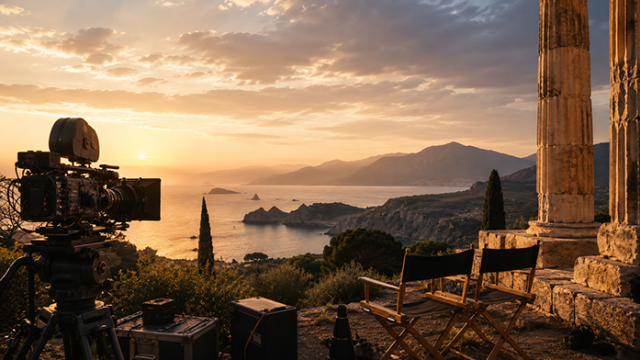
There is a particular hour on the coast, late and gold, when everything seems to belong to the same family of colour. The terrace stone, the dry grass at the path’s edge, the linen draped over a chair — all of it sand and ecru and the faded bone of things left in the sun. Nothing competes. You notice, almost without meaning to, how restful it is to look at. The same logic, it turns out, can live in a wardrobe.

The Quiet Discipline of Tone

A tight warm palette — sand, ecru, bone, clay, the occasional drift toward sage — does something a wider one never can. It makes nearly everything agree. When the whole drawer sits within a few degrees of one another, the act of pairing all but disappears. The clay trousers go with the bone shirt because of course they do; they were always going to. Choice, which is so often the tiring part of getting dressed, quietly recedes.

This is the part people underestimate. Tonal dressing is less a look than a method. It removes decisions before they can accumulate into hesitation. You reach, you layer, you leave — and the result reads as considered precisely because you didn’t labour over it. The palette has done the thinking in advance, on a morning months ago when you bought the right ecru and trusted it would carry.

Where Texture Does the Talking

Strip colour from the conversation and something has to take its place. That something is texture. An all-neutral outfit lives or dies on the interplay of surfaces: the cool slub of washed linen against the dry hand of cotton twill, a loose knit catching light where a camp shirt lies flat. Same family of colour, entirely different ways of holding the day. The eye, denied contrast, goes looking for it elsewhere — and finds it in the weave.

When everything shares a colour, the differences worth noticing are the ones you can feel.

This is why a neutral capsule never reads as monotony when it’s done with care. A linen trouser and a fine knit in the same shade of sand are not the same garment twice. One falls, one clings; one breathes, one warms. Put them together and you get depth without a single competing hue — the off-duty ease that looks accidental and almost never is.

Fewer Things, More Pairings

There is an arithmetic to it, too. A handful of pieces that all speak the same dialect will combine into far more outfits than a closet of one-offs that each demand their own companion. The Sand Edit, the coastal capsule, whatever you call the small considered group — its power is multiplicative. Buy fewer, buy warmer, buy things that last, and the pairings keep arriving on their own.

What you end up with is not a uniform but a kind of ease. A wardrobe that asks nothing of you at seven in the morning and still looks like a choice by noon. And on those long gold evenings, you find you’ve stopped thinking about what you’re wearing at all — which was, quietly, the whole point.