
Building a Scalable Rental Business with WooCommerce

Today, more and more rental entrepreneurs (in hospitality, real estate, car rentals, equipment hire, and more) are growing tired of the heavy constraints imposed by SaaS platforms like Booking.com and Airbnb. These platforms come with steep commissions—often up to 20%—and rigid rules that can seriously limit business growth.

As a result, many are looking for alternatives that allow them to regain control over their rentals and improve their profit margins.

Luckily, there’s a free and powerful solution: the open-source platforms WordPress and WooCommerce. Together, they can become an ideal system for renting out properties, products, or services.

All you need is to tailor these CMSs with one or two dedicated plugins.

In this article, we’ll walk through how to set up this kind of online store in just a few clicks—saving 15–20% on every booking (on €50,000 in revenue, that’s up to €10,000 lost to commissions) and gaining full control over the entire booking process, with no external rules or limitations.

This approach gives you the freedom to scale your business, reinvest more effectively, and diversify—at a time when customers increasingly value personalized experiences and more human interactions than those offered by platforms like Booking.com.

A Five-Star Service

The main plugin we’ll be using today is YITH WooCommerce Booking, which allows you to turn a traditional online store into a fully functional booking system.

Standard WooCommerce stores work in a very straightforward way: a product is purchased, and its stock level (if enabled) goes down. Bookings, however, follow a completely different logic—and that’s exactly where a booking plugin comes in.
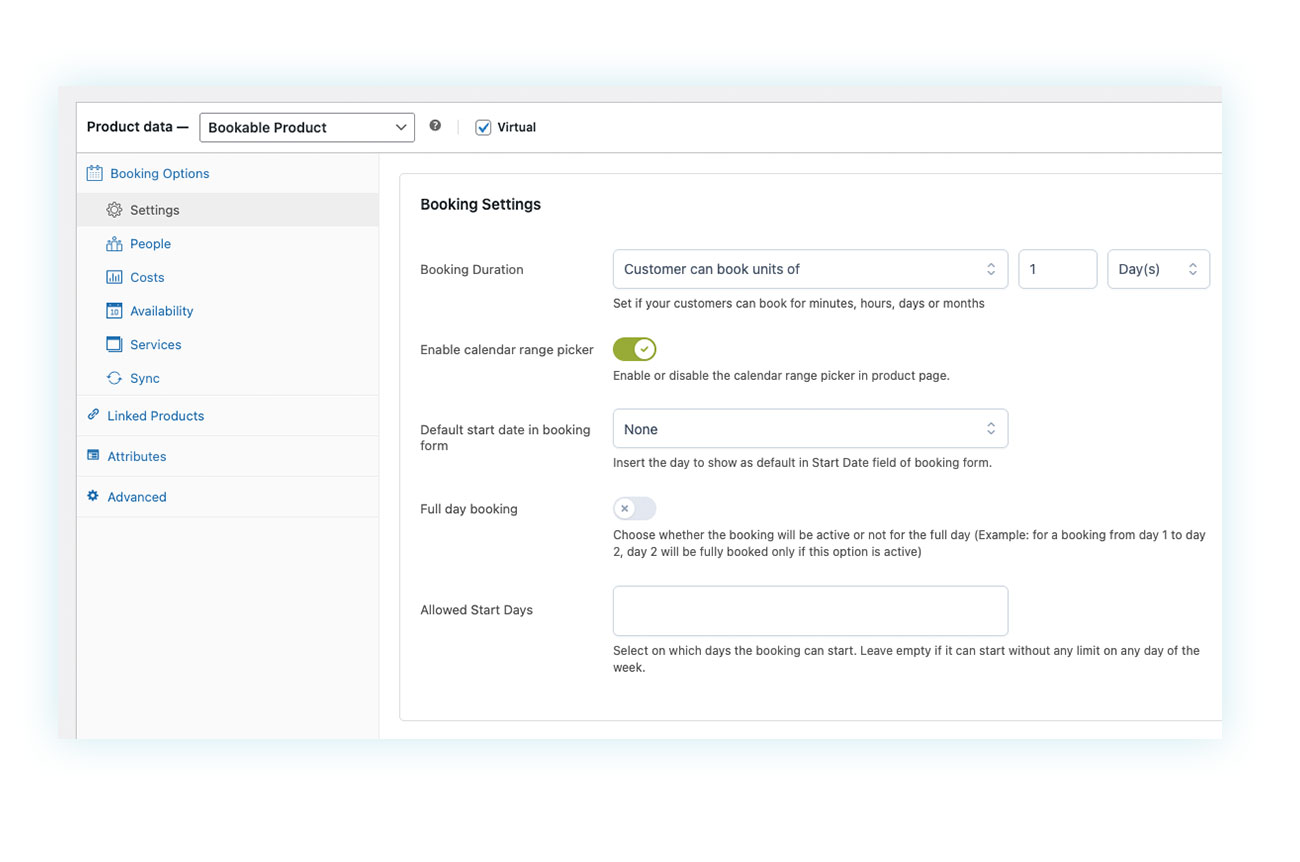
Bookable product

Advanced functionality usually comes at a cost, and there are plenty of alternatives available online. That said, it’s crucial to make sure they include all the features you actually need—something YITH Booking does particularly well.

For example, a booking system must support time slots that can cover different booking units. With this plugin, the seller can choose between:

  • Months – Ideal for mid-term rentals such as homes, cars, boats, equipment, or services
  • Days – Perfect for short-term rentals like holiday homes, rooms, and similar
  • Hours – Great for coworking spaces and services provided during the day
  • Minutes – Useful for booking services like consultations or appointments

But that’s not all. A solid booking plugin must also offer advanced pricing rules. For instance, when renting out a room, it’s often necessary to include:

  • Additional fees – Such as tourist taxes, cleaning fees, or other mandatory charges
  • Cumulative discounts – For longer stays or last-minute bookings
  • High and low season pricing – The cost of a room, house, or even other products and services can vary significantly depending on the time of year

This plugin lets you handle all of that and define as many advanced pricing rules as you need.

Advanced price rules

There are many other features worth mentioning, but these two are among the most commonly missing in cheaper booking plugins—and often the most critical for running a professional rental business.

Overbooking: Watch Out for Synchronization

If you move your entire business to your new online store, you won’t run into any overbooking issues. Problems usually arise when you also accept bookings through external platforms like Booking.com or Airbnb.

That’s understandable, especially in the early stages of your store, when you may want to keep an existing sales channel that’s already performing well.

The plugin does allow you to sync the WooCommerce calendar with the iCal calendars of these platforms, directly from the product page.
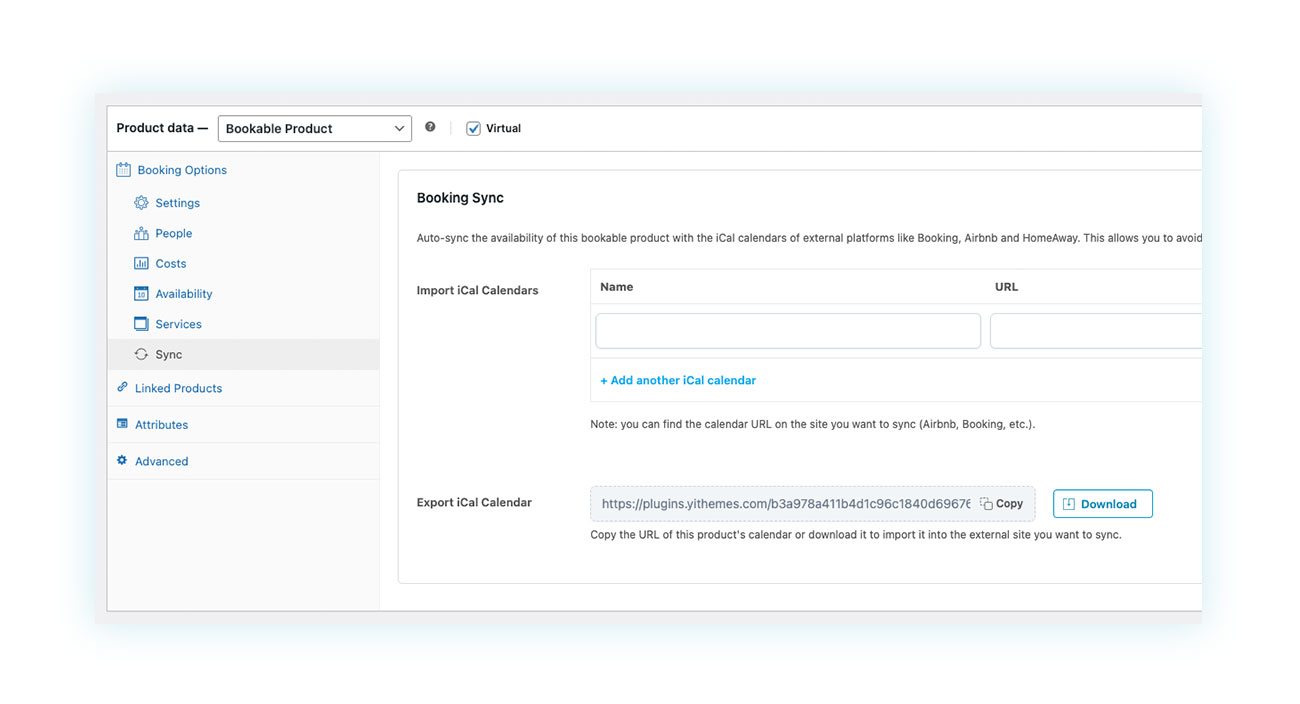
iCal calendar sync

However, there’s an important limitation to keep in mind: iCal synchronization cannot happen more frequently than every 30 minutes.
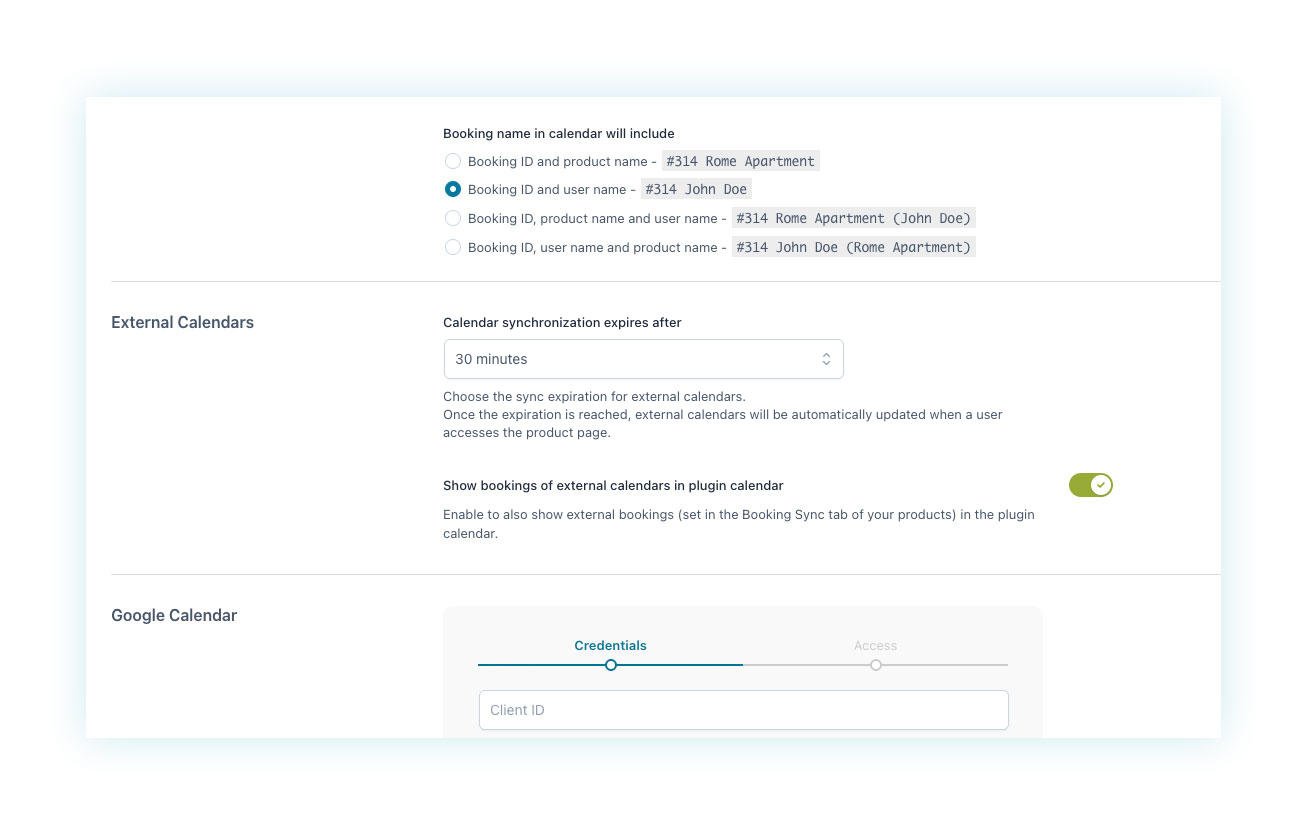
Sync intervals

Because of this, WooCommerce is a great solution for businesses with lower booking volumes, for those that require manual approval, or for anyone managing all reservations directly within WooCommerce.

In other cases, you’ll need a global channel manager that acts as a bridge between the different platforms.

UX and Conversion – The Search Form

Airbnb’s search form is its number-one conversion driver. WooCommerce’s default date handling, on the other hand, is pretty terrible. Luckily, the plugin comes to the rescue here as well. Among the modules you can enable in its control panel is the Search Form, which lets you create a custom search experience for your customers.
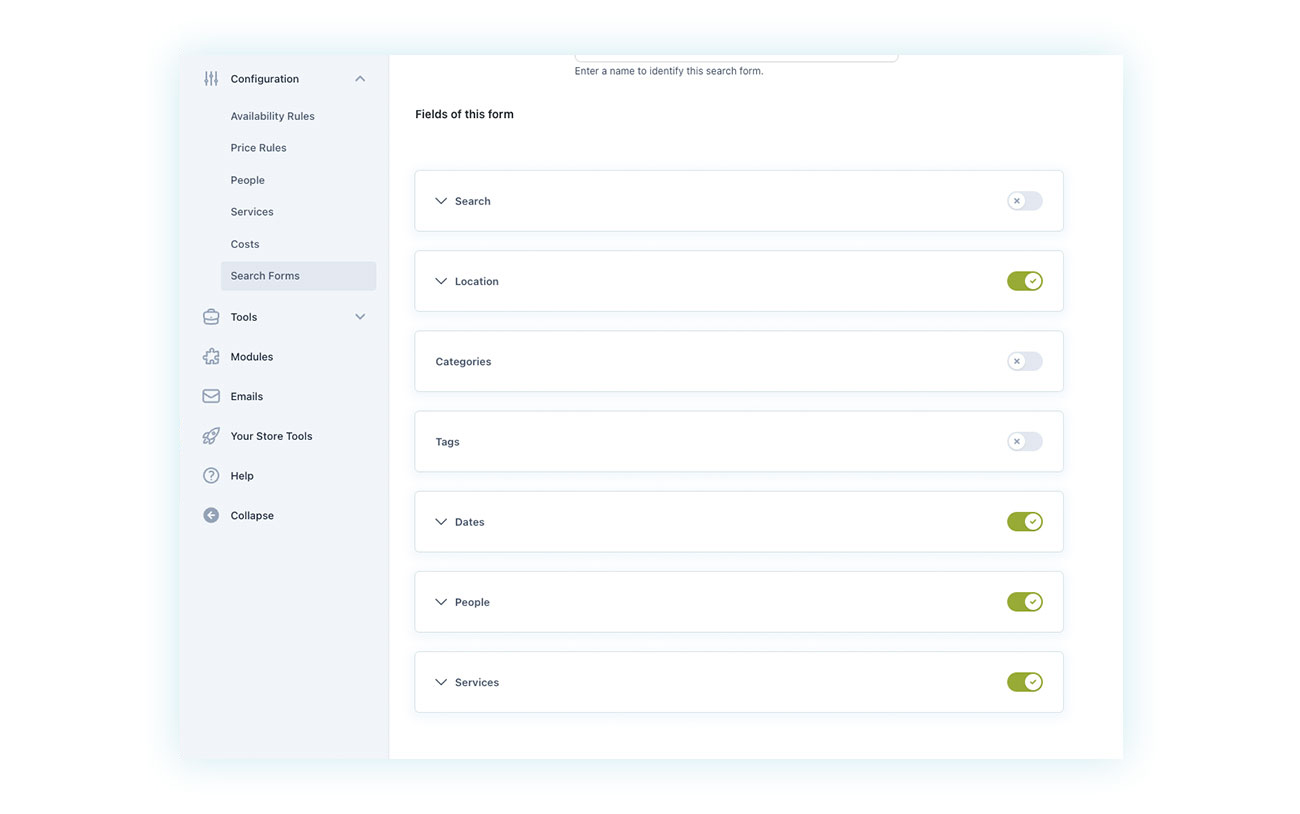
Search form configuration

Within the settings panel, you can choose which booking criteria users can filter by. Location, dates, and number of guests are almost mandatory, but options like pet-friendly or private parking can also be key decision-makers in a search.

This is how the form will appear to end users.

Search form

This shows how a single plugin can completely transform your online store. And while this step is essential, it’s only the beginning. You can take things even further to strengthen your business and stay one step ahead of the competition.

Let’s see how.

Bonus Step: Protect Your Assets with Security Deposits and Down Payments

One of the biggest challenges in the booking industry is renting out high-value assets such as bikes, cars, motorbikes, boats, and even properties. While this kind of business can be very profitable, the higher the value of what you’re renting out, the greater the risk.

The main issues are damage and no-shows—people who book but never turn up, costing you both time and money.

So how do you solve this problem? By using another plugin that integrates seamlessly with YITH WooCommerce Booking: YITH WooCommerce Deposits / Down Payments.

This plugin lets you introduce a security deposit system, meaning the customer pays a percentage of the total amount upfront, with the remaining balance paid later (usually closer to the booking date). This feature is commonly used for pre-orders, where a deposit helps ensure the purchase will actually be completed.

The good news is that, since it’s developed by the same team behind the Booking plugin, Deposits integrates perfectly with it. More specifically, it allows you to add a deposit to the booking balance that is automatically charged X days before the reservation—similar to how Booking.com works, where a guest can book a month in advance and have the amount charged at a later date.

In addition to reducing the risk of no-shows, deposits also improve conversion rates, since customers don’t have to pay the full amount upfront at the time of booking.

Are you a property owner or an entrepreneur?

At this point, the real question is no longer technical—it’s strategic: do you want to simply fill calendars, or do you want to build a solid, scalable business that you truly own?

Platforms like Airbnb and Booking.com are great early-stage accelerators, but they remain intermediaries. They set the rules, charge high commissions, and prevent you from building a direct relationship with your customers. In other words, they give you visibility—but not an asset. As long as you depend on them, your business is never fully under your control.

Building a rental platform with WordPress and WooCommerce represents a real identity shift: from property manager to digital entrepreneur. It means controlling pricing, data, customers, rules, and payment flows. It means reinvesting the 15–20% you used to give away in commissions into marketing, better experiences, and differentiation. It means being able to grow without asking anyone for permission.

With plugins like YITH WooCommerce Booking and Deposits, you have all the tools you need to compete—even functionally—with the big marketplaces, while still retaining full ownership of your business.

If you want your rental activity to remain a side project, keep using SaaS platforms.

If you want to build a real company, start building your own platform.

 Start creating your own digital asset today. Discover YITH Booking.

Suggested readings

Thanks to our users


London Fashion Film Festival is dedicated to celebrating the combined arts of film and fashion in one of the most important centres of fashion in the world, London. The Festival provides the opportunity to take a look at the subject in a variety of ways from documentaries, films about fashion, fashion shorts and films which have been influenced by fashion as well as films that have had an impact on the fashion industry itself.

Rules & Terms

London Fashion Film Festival is hereby granted the right to utilize an excerpt from any film submitted for promotional purposes. The individual or corporation submitting the film hereby warrants that it is authorised to commit the film for screening, and understands and accepts these requirements and regulations. The undersigned shall indemnify and hold harmless London Fashion Film Festival from and against any and all claims, liabilities, losses, damages, and expenses (including but not limited to attorney’s fees, and costs of the court) which may be incurred by reason of any claim involving copyright, trademark, credits, publicity, screening, and loss of or damage to the screening videos entered. the admission fees are non-refundable. The English subtitles is required for non English films. Review

Quality

Value

Communication

Hospitality

Networking

Dates & Deadlines

  • November 4, 2025Opening Date
  • February 15, 2026Earlybird Deadline
  • April 15, 2026Regular Deadline
  • June 15, 2026Late Deadline
  • August 15, 2026Extended Deadline
  • September 1, 2026Notification Date
  • September 22 – 23, 2026Event Date

Categories & Fees

  • Fashion Short
  • Music video
  • Fashion Documentary
  • Student
  • Major Brands
  • Emerging Talent

Architecting Human Identity Through Form, Light, and Material

In the abamode universe, makeup and costume design are not decorative layers

they are structural components of world‑building. Just as abastudio shapes space, light, and movement, abamode shapes the human presence within that space. Every face, every garment, every texture becomes part of a unified visual architecture.

abamode treats the human body as a designed environment, and makeup and costume function as its spatial extensions. Together, they create a coherent identity system that defines character, emotion, and narrative without relying on dialogue.


  1. The abamode Philosophy: Visual Identity as Architecture
    abamode operates on a core belief:
    form communicates before language.
    Makeup and costume design follow the same principles that guide the brand’s spatial and object design:
  • Form as identity geometric clarity, intentional structure, controlled volume.
  • Color as psychology palettes chosen for emotional and narrative impact.
  • Texture as sensation materials that evoke physical and psychological response.
  • Light as a design partner every surface is created with its light‑interaction in mind.

Makeup and costume are not separate departments; they are extensions of the same design logic.


  1. Makeup Design in abamode:
    The Face as a Spatial Surface

In abamode, the face is treated like a micro‑architecture a surface that can be shaped, refined, or disrupted to express narrative.

Key Characteristics of abamode Makeup

  • Minimal but intentional no unnecessary decoration; every mark has meaning.
  • Architectural shading shadows used to sculpt, not beautify.
  • Precision lines controlled geometry that echoes the brand’s spatial language.
  • Subtle prosthetics structural modifications that feel natural yet designed.
  • Hair as form hairstyles treated as volumetric elements, not accessories.

Narrative Function
Makeup in abamode builds characters for:

  • fashion editorials
  • conceptual video projects
  • installation‑based performances
  • experimental visual storytelling

Each face becomes a visual statement, aligned with the brand’s world.


  1. Costume Design in abamode:
    The Body as a Constructed Volume

Costume design in abamode transforms the human body into a sculptural presence. Garments are not clothing they are architectural forms that redefine silhouette, movement, and emotional tone.

Key Characteristics of abamode Costume

  • Architectural silhouettes sharp lines, controlled shapes, intentional proportions.
  • Conceptual minimalism reduced elements with high narrative density.
  • Material honesty raw yet luxurious textures that communicate authenticity.
  • Meaningful details every stitch, fold, and closure serves a purpose.
  • Monochrome or conceptual palettes colors chosen for psychological impact.

Applications
Costume design supports:

  • fashion collections
  • conceptual films
  • artistic installations
  • stage and performance environments

The result is a visual identity system that merges body, space, and narrative.


  1. Unified System:
    The abamode Integration of Makeup & Costume

Makeup and costume in abamode are designed together as a single organism.
The harmony between face and garment is essential.

Core Integrations

  • Skin tone ↔ garment color harmony or contrast based on narrative.
  • Facial geometry ↔ silhouette geometry aligned structural language.
  • Surface texture ↔ fabric texture shared tactile identity.
  • Light behavior ↔ material behavior designed for the same illumination.

This integration ensures that the character feels coherent within the abamode world.


  1. The abamode Workflow:
    From Concept to Execution

Step 1 -World Analysis
Understanding the spatial, emotional, and narrative environment.

Step 2 – Visual Identity Profile

  • Moodboard
  • Color palette
  • Concept references

Step 3 -Design Development
Sketching makeup concepts, garment silhouettes, and material studies.

Step 4 – Prototyping & Testing
Makeup tests, costume fittings, and adjustments based on light and camera.

Step 5 – Final Execution
On‑set makeup application, costume dressing, and coordination with art direction.

This workflow ensures that every project maintains the signature abamode aesthetic.


  1. The Role of Makeup & Costume in the abamode Brand

abamode is not a fashion label it is a visual universe.
Makeup and costume design are essential pillars of this universe, shaping:

  • character identity
  • emotional atmosphere
  • narrative direction
  • brand signature

They complete the ecosystem that includes spatial design, object creation, installation art, and conceptual storytelling.


World Style Encyclopedia

Global Style Encyclopedia

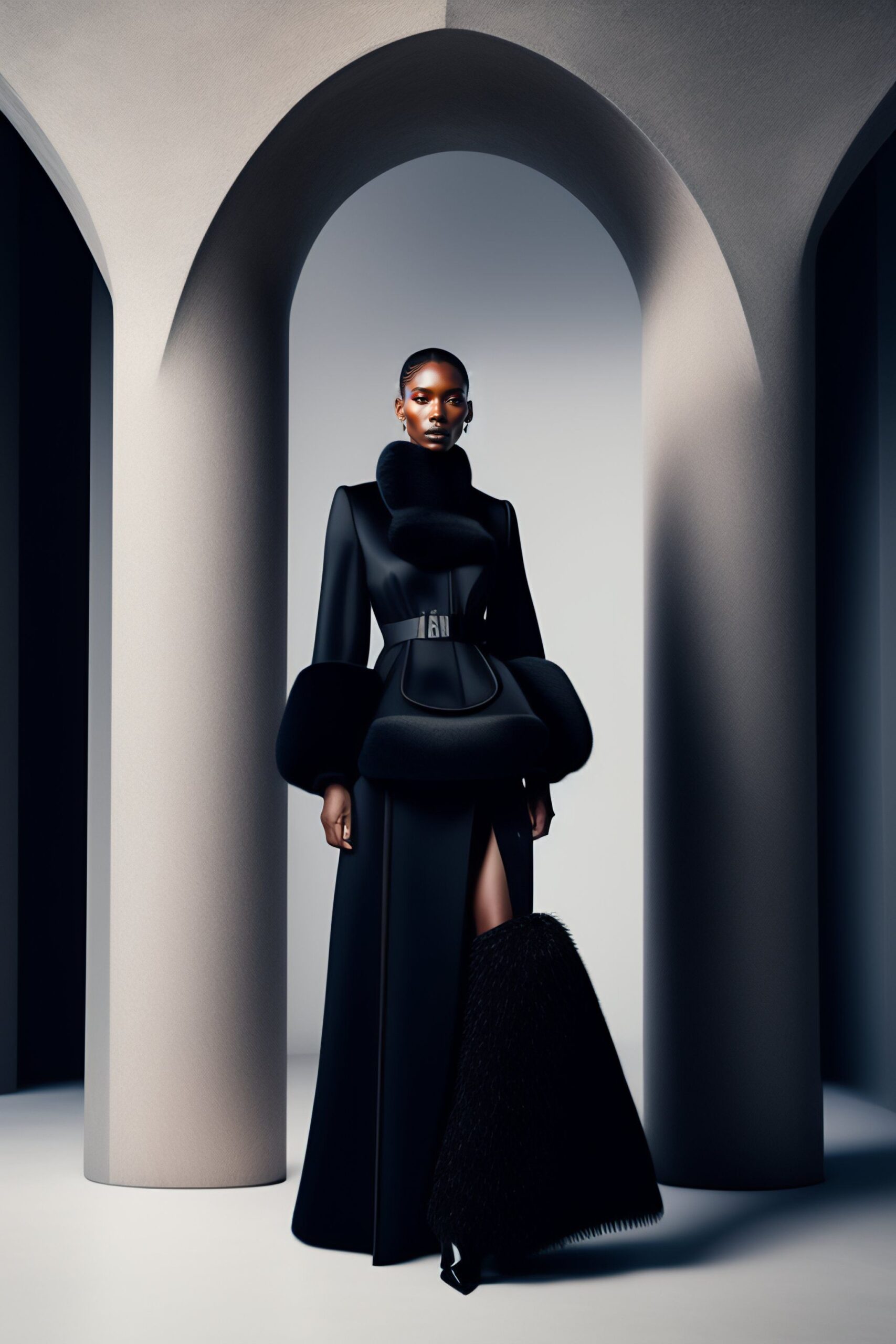
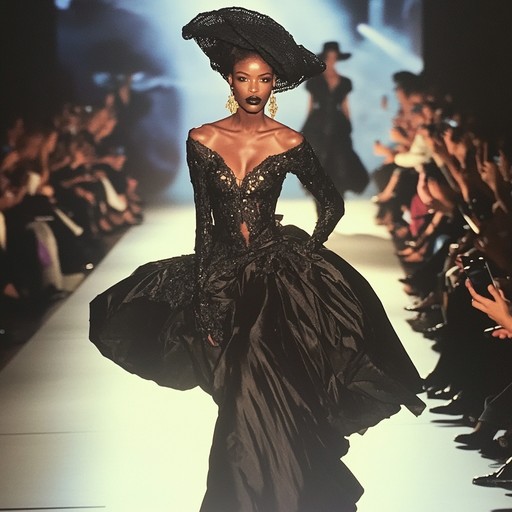
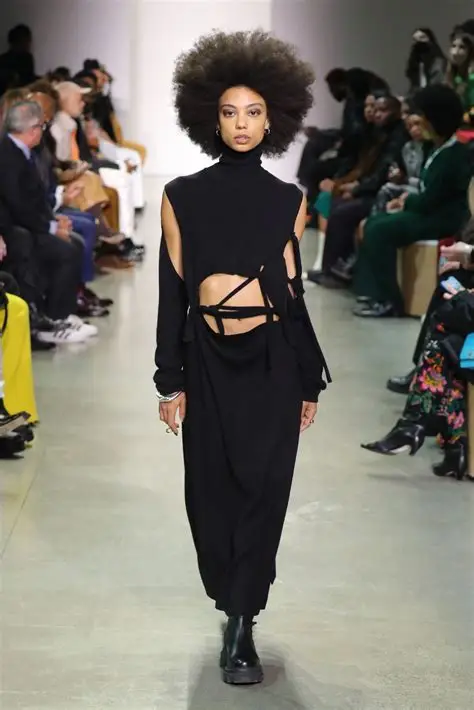
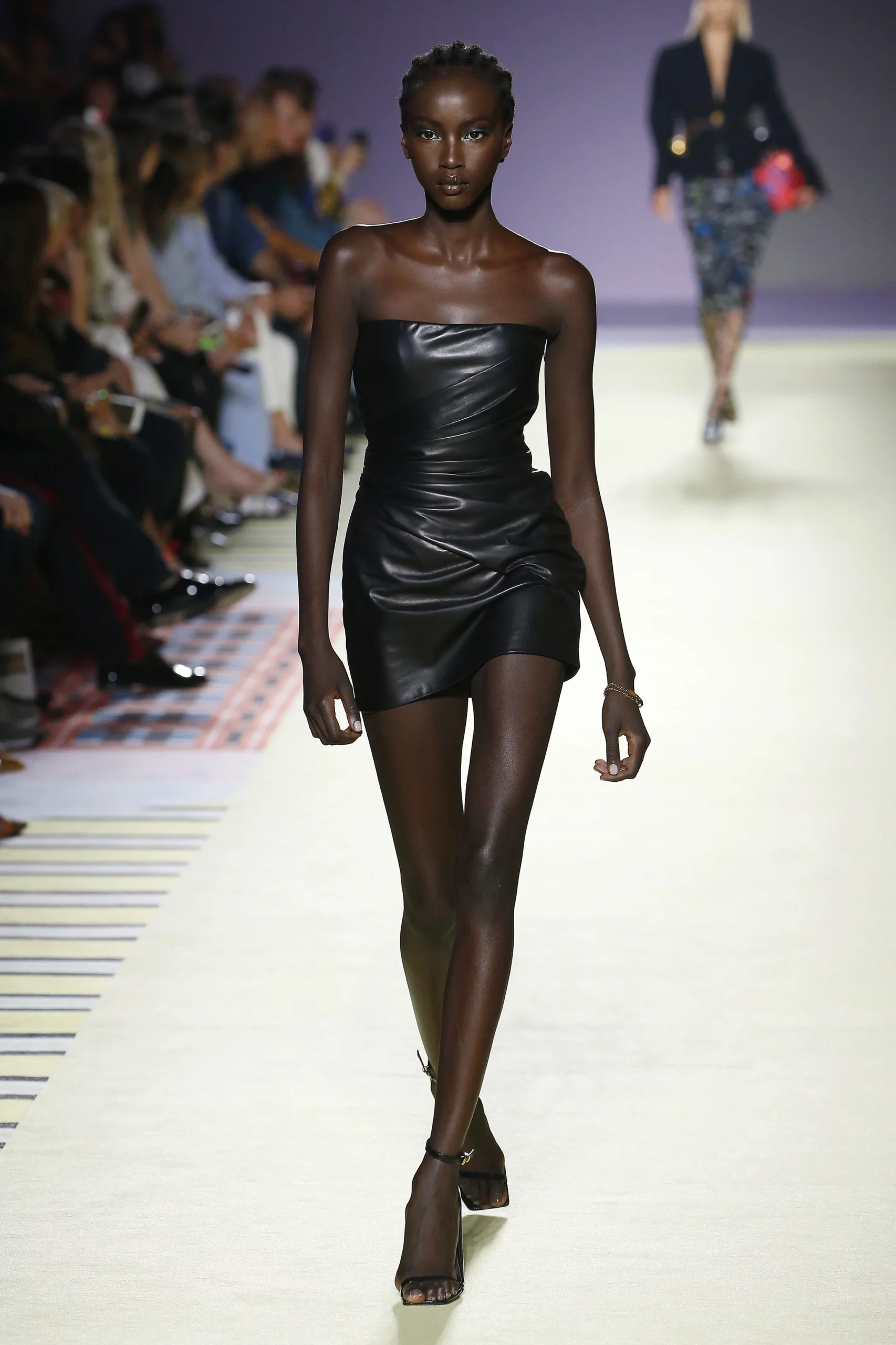
Luxury Black Runway Fashion

A comprehensive exploration of fashion, interior design, architecture, and lifestyle aesthetics — from historical traditions to contemporary trends.

Style is not limited to clothing. Every aesthetic represents a worldview visible in fashion, home design, architecture, furniture, colors, materials, music, art, and lifestyle.

Minimalism is not just simple clothing; the same philosophy appears in architecture, interior design, product design, and daily living.

1. Classic & Historical Styles

Classic Luxury Black Runway

Styles rooted in European art, architecture, and ancient civilizations.

Classic

Philosophy: Order, proportion, symmetry, timelessness.

Neoclassical

A refined return to Greek and Roman principles.

Victorian

Decorative, ornate, historical.

2. Modern & Minimal

Modern Luxury Black Runway

Modernism

Philosophy: Form follows function.

Minimalism

Philosophy: Less, but better.

Scandinavian

Warm minimalism with comfort.

Japandi

Japanese minimalism blended with Scandinavian warmth.

3. Nature-Inspired Styles

Nature Luxury Black Runway

Wabi-Sabi

Beauty in imperfection and simplicity.

Biophilic Design

Bringing nature indoors.

Mediterranean

Warm coastal aesthetic.

4. Luxury & Aristocratic

Luxury Black Runway Fashion

Old Money

Heritage and quality over flashy wealth.

Quiet Luxury

Subtle, refined, logo-free luxury.

Modern Classic

Classic forms blended with modern simplicity.

5. Urban & Industrial

Urban Black Runway Fashion

Industrial

Brick, concrete, metal, wood.

Loft

Open space, high ceilings.

Brutalism

Raw concrete, heavy forms.

6. Artistic & Free

Bohemian Black Runway Fashion

Bohemian

Free, artistic, travel-inspired.

Eclectic

Mixing styles without strict rules.

Maximalism

More, but with personality.

7. Rural & Cottage

Cottage Black Runway Fashion

Farmhouse

Warm, functional rural homes.

Cottagecore

Romanticized slow rural life.

French Country

French elegance + rustic simplicity.

8. Dark & Alternative

Dark Black Runway Fashion

Gothic

Dark, dramatic, historic.

Dark Academia

Inspired by literature and historic universities.

Light Academia

Brighter, softer version of Dark Academia.

9. Futuristic

Futuristic Black Runway Fashion

High-Tech

Technology as part of the aesthetic.

Futuristic

Inspired by space and innovation.

Cyberpunk

Tech + dark urban mood.

10. Persian Styles

Persian Black Runway Fashion

Persian Traditional

Rugs, kilims, ceramics, wood.

Iranian Islamic

Geometry, calligraphy, tilework.

Iranian Modern

Modern architecture + Persian heritage.

“True style is not just what we wear; it is the space we live in and the world we choose.”


صحنه‌پردازی: سیر تحول تاریخی، مبانی نظری و چشم‌انداز آینده


مقالهٔ پژوهشی 


چکیده

صحنه‌پردازی (Scenography) به‌عنوان هنر و علم طراحی فضا برای اجرا، از آیین‌های ابتدایی بشر آغاز شده و در طول تاریخ با تحولات اجتماعی، تکنولوژیک و زیبایی‌شناختی دگرگون شده است. این مقاله با رویکردی تحلیلی، سیر تاریخی صحنه‌پردازی را از گذشته تا امروز بررسی می‌کند و سپس چشم‌انداز آیندهٔ آن را در بستر فناوری‌های نوین، متریال‌های هوشمند و جهان‌سازی چندلایه تحلیل می‌کند. هدف این پژوهش، ارائهٔ یک چارچوب نظری برای فهم صحنه‌پردازی به‌عنوان «زبان فضایی» در هنرهای نمایشی، سینما، اینستالیشن و طراحی فضاهای مفهومی است.


۱. مقدمه

صحنه‌پردازی یکی از بنیادی‌ترین ابزارهای روایت بصری است. از نخستین آیین‌های جمعی تا صحنه‌های دیجیتال امروز، انسان همواره تلاش کرده است فضا را به ابزاری برای بیان تبدیل کند. صحنه‌پردازی نه‌تنها محیط اجرا را شکل می‌دهد، بلکه تجربهٔ مخاطب، حرکت بازیگر، نور، صدا و حتی زمان را سازمان‌دهی می‌کند.  

در این مقاله، صحنه‌پردازی به‌عنوان یک «رشتهٔ میان‌رسانه‌ای» بررسی می‌شود؛ رشته‌ای که میان معماری، هنرهای نمایشی، طراحی صنعتی، نورپردازی، صدا، و فناوری‌های دیجیتال قرار دارد.


۲. پیشینهٔ تاریخی صحنه‌پردازی


۲–۱. آیین‌ها و نمایش‌های اولیه

در جوامع ابتدایی، صحنه‌پردازی هنوز به‌عنوان یک هنر مستقل شناخته نمی‌شد. فضاهای آیینی شامل:  

– زمین باز،  

– آتش،  

– جمعیت،  

– حرکت‌های نمادین،  

– و نور طبیعی  

بودند.  

در این دوره، صحنه‌پردازی بیشتر «محل وقوع» بود تا «طراحی».


۲–۲. تئاتر یونان: آغاز معماری صحنه

یونانیان نخستین کسانی بودند که صحنه را به‌صورت معماری طراحی کردند.  

عناصر کلیدی:  

– آرایش نیم‌دایرهٔ تماشاگران،  

– سکوهای سنگی،  

– پس‌زمینهٔ ثابت،  

– و توجه به آکوستیک.  

در این دوره، صحنه‌پردازی تبدیل شد به «جهان نمادین».


۲–۳. رنسانس: صحنه به‌عنوان تصویر

با ظهور پرسپکتیو، نقاشی‌های پس‌زمینه و پرده‌های متحرک، صحنه‌پردازی وارد مرحلهٔ تصویرسازی شد.  

ویژگی‌ها:  

– استفاده از نقاشی‌های سه‌بعدی،  

– ایجاد عمق بصری،  

– کنترل نگاه مخاطب.  


۲–۴. قرن ۱۹ و ۲۰: صحنه‌پردازی مدرن

ورود نور الکتریکی و متریال‌های صنعتی، صحنه‌پردازی را به یک رشتهٔ مستقل تبدیل کرد.  

سبک‌های مهم:  

– رئالیسم،  

– مینیمالیسم،  

– اکسپرسیونیسم،  

– آوانگارد.  

در این دوره، صحنه‌پردازی از تصویر به «فضا» تبدیل شد.


۳. صحنه‌پردازی معاصر: جهان‌سازی چندرسانه‌ای


۳–۱. سینما و سریال

در سینما، صحنه‌پردازی تبدیل به «اکوسیستم روایی» شده است.  

ترکیب:  

– معماری،  

– نور،  

– رنگ،  

– حرکت دوربین،  

– صدا،  

– متریال‌های ترکیبی.  


۳–۲. اینستالیشن و هنر معاصر

در اینستالیشن، صحنه‌پردازی به تجربه تبدیل می‌شود.  

مخاطب وارد فضا می‌شود و بخشی از روایت می‌گردد.  

فضا = اثر.


۳–۳. طراحی فضاهای مفهومی و رویدادها

صحنه‌پردازی وارد حوزهٔ برندینگ شده است.  

فضا به‌عنوان «هویت» عمل می‌کند.  

ترکیب تکنیک‌های ساخت با روایت، فضا را به ابزار ارتباطی تبدیل می‌کند.


۴. مبانی نظری صحنه‌پردازی


۴–۱. صحنه‌پردازی به‌عنوان زبان فضایی

صحنه‌پردازی مجموعه‌ای از نشانه‌هاست:  

– فرم،  

– نور،  

– رنگ،  

– متریال،  

– حرکت،  

– صدا.  

این نشانه‌ها با هم معنا می‌سازند.


۴–۲. صحنه‌پردازی و بدن انسان

حرکت بازیگر یا مخاطب، بخشی از طراحی صحنه است.  

فضا نه‌تنها دیده می‌شود، بلکه «تجربه» می‌شود.


۴–۳. صحنه‌پردازی و زمان

صحنه یک ساختار زمانی دارد:  

– ریتم نور،  

– تغییرات صدا،  

– حرکت سازه‌ها،  

– مسیرهای بازیگر.


۵. آیندهٔ صحنه‌پردازی: اکوسیستم‌های هوشمند


۵–۱. صحنه‌های واکنشی (Responsive Environments)

فضا به مخاطب پاسخ می‌دهد.  

نور، صدا و فرم‌ها بر اساس رفتار انسان تغییر می‌کنند.


۵–۲. متریال‌های هوشمند

متریال‌هایی که:  

– شکل عوض می‌کنند،  

– نور را جذب یا دفع می‌کنند،  

– با دما یا حرکت واکنش نشان می‌دهند.


۵–۳. واقعیت افزوده و ترکیبی (AR/VR/XR)

صحنهٔ فیزیکی + لایهٔ دیجیتال.  

جهان‌های چندلایه و تعاملی.


۵–۴. صحنه‌پردازی داده‌محور

فضا بر اساس داده‌های رفتاری مخاطب تغییر می‌کند.  

صحنه‌ها یاد می‌گیرند و تکامل پیدا می‌کنند.


۶. نتیجه‌گیری

صحنه‌پردازی از گذشته تا امروز مسیر تکاملی مهمی را طی کرده است:  

از آیین‌های ابتدایی → معماری صحنه → تصویرسازی → جهان‌سازی → اکوسیستم‌های هوشمند.  

در آینده، صحنه‌پردازی نه‌تنها یک هنر، بلکه یک زبان برای ساخت جهان‌های قابل تجربه خواهد بود؛ جهانی که در آن فضا، نور، صدا، متریال و حرکت با هم روایت می‌سازند.


۷. منابع پیشنهادی برای مطالعهٔ بیشتر

(همگی منابع عمومی و قابل دسترس)


– Aronson, Arnold. The History and Theory of Environmental Scenography.  

– McKinney, Joslin & Butterworth, Philip. The Cambridge Introduction to Scenography.  

– Howard, Pamela. What is Scenography?  

– Grotowski, Jerzy. Towards a Poor Theatre.  

– Brook, Peter. The Empty Space.  

– Pavis, Patrice. Dictionary of Theatre Terms.  

– Emigh, John. Masked Performance: The Play of Self and Other in Ritual and Theatre.  .