

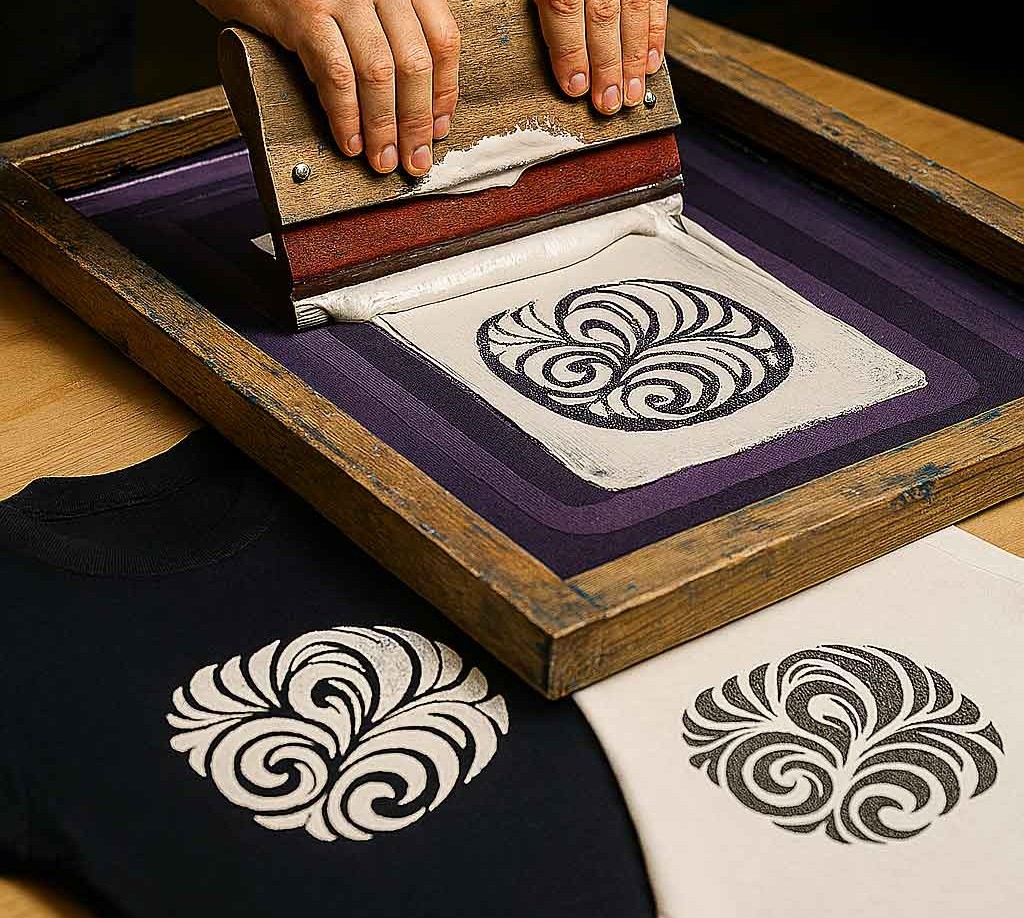
چاپ سیلک اسکرین
چاپ سیلک اسکرین
✦ Official Silk Printing Text for Abastudio
در آبااستودیو، چاپ سیلک بهعنوان یکی از دقیقترین و ماندگارترین روشهای چاپ، با استانداردهای حرفهای و کنترلشده اجرا میشود. ما از ترکیب تجهیزات تخصصی، شابلونهای باکیفیت و جوهرهای استاندارد جهانی استفاده میکنیم تا خروجی نهایی، شفاف، یکدست و مقاوم باشد.
چاپ سیلک در آبااستودیو انتخابی ایدهآل برای تیشرت، هودی، بگ پارچهای، پاکتهای کاغذی و بستهبندی برندها است. این روش امکان تولید رنگهای مات، پرقدرت و کاملاً یکنواخت را فراهم میکند و در تیراژهای متوسط و بالا، بهترین نسبت کیفیت به هزینه را ارائه میدهد.
✦ مزایای چاپ سیلک در آبااستودیو
– کیفیت پایدار و حرفهای در هر نوبت چاپ
– دوام بالا در برابر شستشو، سایش و استفاده روزمره
– رنگهای قوی و چشمگیر با پوشش یکنواخت
– مناسب برای لوگوها، طرحهای مینیمال و رنگهای تخت
– امکان چاپ روی انواع پارچه و پاکتهای کرافت و تحریر
– بهصرفه در تیراژهای سازمانی و تولیدی
✦ کاربردها
– چاپ لوگو و هویت بصری روی تیشرتهای سازمانی و تبلیغاتی
– چاپ طرحهای اختصاصی روی بگ پارچهای و لباسهای سفارشی
– چاپ برند، QR و اطلاعات تماس روی پاکتهای بستهبندی و فروشگاهی
– تولید سریهای یکنواخت برای برندها، رویدادها و کمپینهای تبلیغاتی
✦ استاندارد آبااستودیو
در آبااستودیو، هر پروژه از مرحله طراحی تا ساخت شابلون، تنظیم رجیستر و چاپ نهایی با دقت کامل انجام میشود. کنترل کیفیت در چند مرحله انجام میگیرد تا هر چاپ، دقیقاً مطابق استاندارد برند شما باشد.
Hello world!
Welcome to Kriesi.at Theme Demos Sites. This is your first post. Edit or delete it, then start blogging!

How to Build a Coastal Capsule
There is a particular kind of ease that arrives toward the end of a long day by the water, when the light goes soft and gold and nobody is in a hurry to be anywhere. You reach for whatever is nearest, and somehow it works. That ease is not luck. It is the quiet dividend of a wardrobe you have thought about once, carefully, so you never have to think about it again.
A coastal capsule begins with a decision most of us resist: to own fewer things, and to let them all belong to the same conversation. One warm palette. Sand, ecru, bone, clay, a little sage to keep it honest. When everything lives in the same family of tones, nothing clashes, and the morning question of what goes with what simply disappears.
Choosing your anchors
Every capsule rests on a few anchors — the pieces you would replace first if they wore out, because you wear them most. Start with a wide-leg linen trouser, the kind that reads dressed without trying. Add a camp shirt, collar open, sleeves rolled, equally at home over a swimsuit or under a knit. A midi dress earns its place by doing the work of an entire outfit on the days you have none to give. And a knit — something with weight to it — for the hour the breeze turns and dinner moves indoors.
Four pieces, and already you have mornings, afternoons, and evenings covered. The trick is that each anchor should pull more than its weight. If a piece only works one way, it isn’t an anchor. It’s a guest.
The art of letting things layer
Restraint is what makes the mixing effortless. Because the palette holds together, layering becomes a matter of texture rather than color — the slub of washed linen against the close grain of a knit, a shirt left open over a dress, trousers cuffed once to catch the light. You are not building outfits so much as letting pieces fall into easy company.
A good capsule is not a smaller wardrobe. It is a wardrobe that has stopped arguing with itself.
This is the off-duty logic that runs through the Sand Edit and the coastal pieces we keep returning to: buy fewer, choose better, and trust the things you own to get along. A linen trouser does not need a season. A camp shirt does not go out of style; it only softens.
Why less is the point
The reward is not minimalism for its own sake. It is the small, recurring relief of a morning that asks nothing of you — of reaching into a closet where every choice is already a good one. You spend the saved attention elsewhere: on the coffee, the walk down to the water, the long unhurried dinner that runs past dark.
Build it once, in one warm palette, and the rest of the season takes care of itself. By August, you stop noticing what you are wearing at all. Which, in the end, is rather the point.

One Palette, Endless Pairings
There is a particular hour on the coast, late and gold, when everything seems to belong to the same family of colour. The terrace stone, the dry grass at the path’s edge, the linen draped over a chair — all of it sand and ecru and the faded bone of things left in the sun. Nothing competes. You notice, almost without meaning to, how restful it is to look at. The same logic, it turns out, can live in a wardrobe.
The Quiet Discipline of Tone
A tight warm palette — sand, ecru, bone, clay, the occasional drift toward sage — does something a wider one never can. It makes nearly everything agree. When the whole drawer sits within a few degrees of one another, the act of pairing all but disappears. The clay trousers go with the bone shirt because of course they do; they were always going to. Choice, which is so often the tiring part of getting dressed, quietly recedes.
This is the part people underestimate. Tonal dressing is less a look than a method. It removes decisions before they can accumulate into hesitation. You reach, you layer, you leave — and the result reads as considered precisely because you didn’t labour over it. The palette has done the thinking in advance, on a morning months ago when you bought the right ecru and trusted it would carry.
Where Texture Does the Talking
Strip colour from the conversation and something has to take its place. That something is texture. An all-neutral outfit lives or dies on the interplay of surfaces: the cool slub of washed linen against the dry hand of cotton twill, a loose knit catching light where a camp shirt lies flat. Same family of colour, entirely different ways of holding the day. The eye, denied contrast, goes looking for it elsewhere — and finds it in the weave.
When everything shares a colour, the differences worth noticing are the ones you can feel.
This is why a neutral capsule never reads as monotony when it’s done with care. A linen trouser and a fine knit in the same shade of sand are not the same garment twice. One falls, one clings; one breathes, one warms. Put them together and you get depth without a single competing hue — the off-duty ease that looks accidental and almost never is.
Fewer Things, More Pairings
There is an arithmetic to it, too. A handful of pieces that all speak the same dialect will combine into far more outfits than a closet of one-offs that each demand their own companion. The Sand Edit, the coastal capsule, whatever you call the small considered group — its power is multiplicative. Buy fewer, buy warmer, buy things that last, and the pairings keep arriving on their own.
What you end up with is not a uniform but a kind of ease. A wardrobe that asks nothing of you at seven in the morning and still looks like a choice by noon. And on those long gold evenings, you find you’ve stopped thinking about what you’re wearing at all — which was, quietly, the whole point.
Hello world!
Welcome to WordPress. This is your first post. Edit or delete it, then start writing!

From Morning Swim to Long Dinner
The best days by the water are the ones you don’t have to plan around. You wake early, while the sea is still flat and the light is the colour of weak tea, and you go in before you can talk yourself out of it. By the time you climb back up the path, the morning has already decided to be generous. What you are wearing then is, more or less, what you will be wearing when the last plate is cleared. That is the whole trick of a coastal day, and the whole point of dressing for one.
The Morning, Unhurried
Linen earns its reputation in the first hour. Wide-leg trousers thrown on over a still-damp swimsuit, a wrap top tied loose, a pair of flat sandals that have seen three summers and are better for it. Nothing here is precious. You can sit on a low wall, lean against a sun-warmed door, carry coffee and bread back from the place that opens late and never apologises for it. The fabric creases, and the creases are part of it — proof of an easy morning rather than evidence of neglect.
This is what we mean when we talk about clothes that ask nothing of you. They do not need managing. They do not flinch at salt or sand or the back of a borrowed chair. You forget you are wearing them, which is the highest thing an outfit can do for a day that wants your attention elsewhere.
Small Shifts, Long Afternoons
The day turns slowly, the way good ones do. The wrap, re-tied a little higher, reads differently by mid-afternoon. The sandals are swapped for something with a touch more intention. Later, as the air cools, a linen layer goes over the top — a camp shirt left open, a light overshirt that smells faintly of the morning. None of it is a costume change. It is the same self, edited by degrees, the way the light edits the hills behind the harbour.
Versatility is not owning more. It is owning the right few things and trusting them to keep up with you.
This is the quiet case for the coastal capsule — for buying fewer, better pieces that move with the hours instead of dividing the day into outfits. A single considered top, a trouser that goes anywhere, a layer for when the sun drops. The Sand Edit was built around exactly this: a small, warm wardrobe that stretches across a long day without ever drawing attention to the effort.
When the Table Fills
By dinner you have done nothing but live in your clothes, and they have repaid you for it. The table fills slowly, the way tables do when no one is in a hurry to leave. Candles, eventually. The same linen, now soft with the whole day in it, sitting easily among glasses and conversation that runs long.
That is the version of dressing we keep coming back to — not the outfit that performs, but the one that simply stays. You stop noticing it somewhere around the second swim. You remember it, faintly, only when you fold it away at the end and find it ready for tomorrow.